Year-end financial close for HOAs: budget touch-ups, reserves, and 1099 prep
Close the books without drama. This plain-English guide to HOA year-end financials which covers accruals and bad-debt checks, reserve contributions, audit/review prep, 1099-NEC basics, and what to share with owners. This way, your board starts January with clean numbers and fewer surprises.
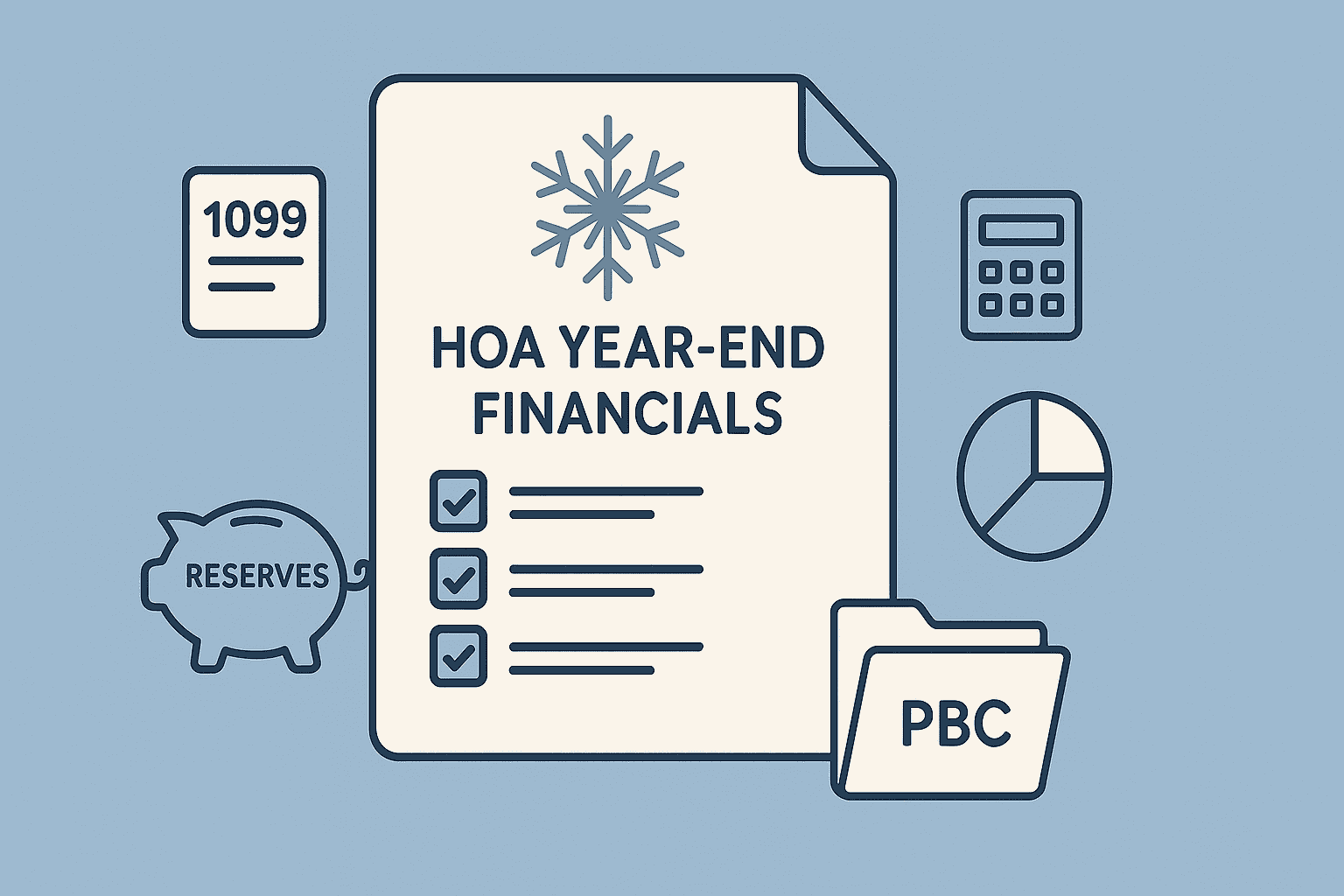
Year-end is cleanup time. Close the books. Fix small issues before they become big ones. Share what matters with owners. This guide walks you through a lean, board-friendly process. It stays practical and avoids jargon.
Let’s start.
1) Close the books: accruals and bad-debt review
Like every other year; record end-of-year accruals. Match expenses and income to the right period. Then scan your delinquency report. Age the balances (30/60/90+). Decide what is collectible. Consider a realistic bad-debt allowance. Document your reasoning. Short notes beat fuzzy memory in March.
2) Budget touch-ups before you lock next year
Compare actuals vs. budget. Explain the big variances. Adjust next year’s plan based on what you learned. Confirm that dues and expense lines reflect reality, not wishful thinking. Here it might be good to be a bit conservative. Note any one-offs that should not repeat.
3) Reserves: contributions and your study
Check that reserve contributions were posted each month. If you paused during the year, plan a catch-up or adjust the funding plan with your reserve professional. Use your latest reserve study to prioritize 1-3 capital items for the coming year. Under-funded reserves lead to special assessments. Owners hate that.
4) Audit / review / compilation prep
Know what your documents or state require. Some associations need an annual audit. Others can do a review or a compilation. An audit tests transactions and controls. A review offers limited assurance with analytics and inquiries. A compilation is a presentation only. No assurance. Book time with a CPA now and prepare a clean PBC (“provided by client”) list: GL, bank recs, invoices for large items, reserve reports, minutes, insurance. (FSR)
5) 1099 prep: vendors, due dates, and forms
Collect W-9s from all vendors first. No W-9, no check in January. You need the legal name and TIN to file.
For nonemployee services paid $600+ during the year (e.g., handyman, landscaper, web contractor), file 1099-NEC. The IRS due date to file is January 31. Same date for furnishing recipient copies.
Use 1099-MISC for other categories (for example, rent or certain attorney payments) when applicable. Filing deadlines: Feb 28 paper or Mar 31 e-file (different rules for specific boxes). Check the IRS page you use to file.
Note a coming change: for returns after Dec 31, 2025, the 1099-NEC reporting threshold increases from $600 to $2,000 (indexed after 2026). Plan your vendor communications and tracking now.
Pro tip: keep W-9s on file, confirm addresses, and log totals by vendor monthly so year-end is push-button.
6) Owner “year-end pack”
Share a simple set: approved budget, variance summary, reserve contribution total, year-end balance sheet and income statement, and how to request full records. Owners have inspection rights under most state laws, with limits for privacy. A clear process avoids friction.
Quick checklist (copy into your agenda)
- Post accruals. Update the delinquency/bad-debt allowance.
- Lock next-year budget after variance review.
- Confirm reserve contributions and align with the reserve study.
- Schedule audit/review/compilation and assemble the PBC list.
- Gather W-9s. Prepare 1099-NEC/1099-MISC. Note due dates.
- Publish the owner year-end pack and explain how to see more.
These steps track to standard HOA statements (budget, monthly financials, reserves) and common record-access practices. Deadlines for 1099s come from the IRS. (IRS)
Practical tips that save you time
- Keep one “year-end” folder with bank recs, large invoices, contracts, and certificates of insurance.
- Take minutes that explain big variances and reserve decisions. Future you will thank present you.
- If you’re under-reserving, be honest now. Small dues changes beat surprise assessments.
Final note
This is practical guidance, not legal or tax advice. Confirm state rules and your governing documents. When in doubt, ask your CPA or attorney. You can also read a general guide for HOA finance management here.
FAQ — HOA year-end financials
- Do we need an audit, review, or compilation? Check your governing documents and state law first. An audit gives the highest assurance, a review provides limited assurance, and a compilation provides no assurance (presentation only). Many states or bylaws specify which level you need—confirm before year-end and book a CPA.
- Which 1099s are required, and when are they due? File 1099-NEC for $600+ in nonemployee compensation (e.g., landscaper, handyman). Due Jan 31 to the IRS and to the recipient. Use 1099-MISC for other categories (e.g., rent, certain attorney gross proceeds) with Feb 28 (paper) / Mar 31 (e-file) deadlines. If you file 10+ information returns in total, you must e-file. Collect W-9s early.
- Cash, accrual, or modified accrual for year-end? Accrual is generally preferred/GAAP-aligned for clearer hoa year-end financials and for CPA engagements; some associations use modified accrual during the year. Choose with your CPA based on statutes and bylaws, but aim for accrual for the annual package.
- What should we include in the owner year-end pack (and what can owners see)? Include the approved budget, variance notes, reserve contribution total, and year-end balance sheet and income statement, plus how owners can request records. Owners generally have rights to inspect financial records (details vary by state), with privacy limits—state your process clearly.