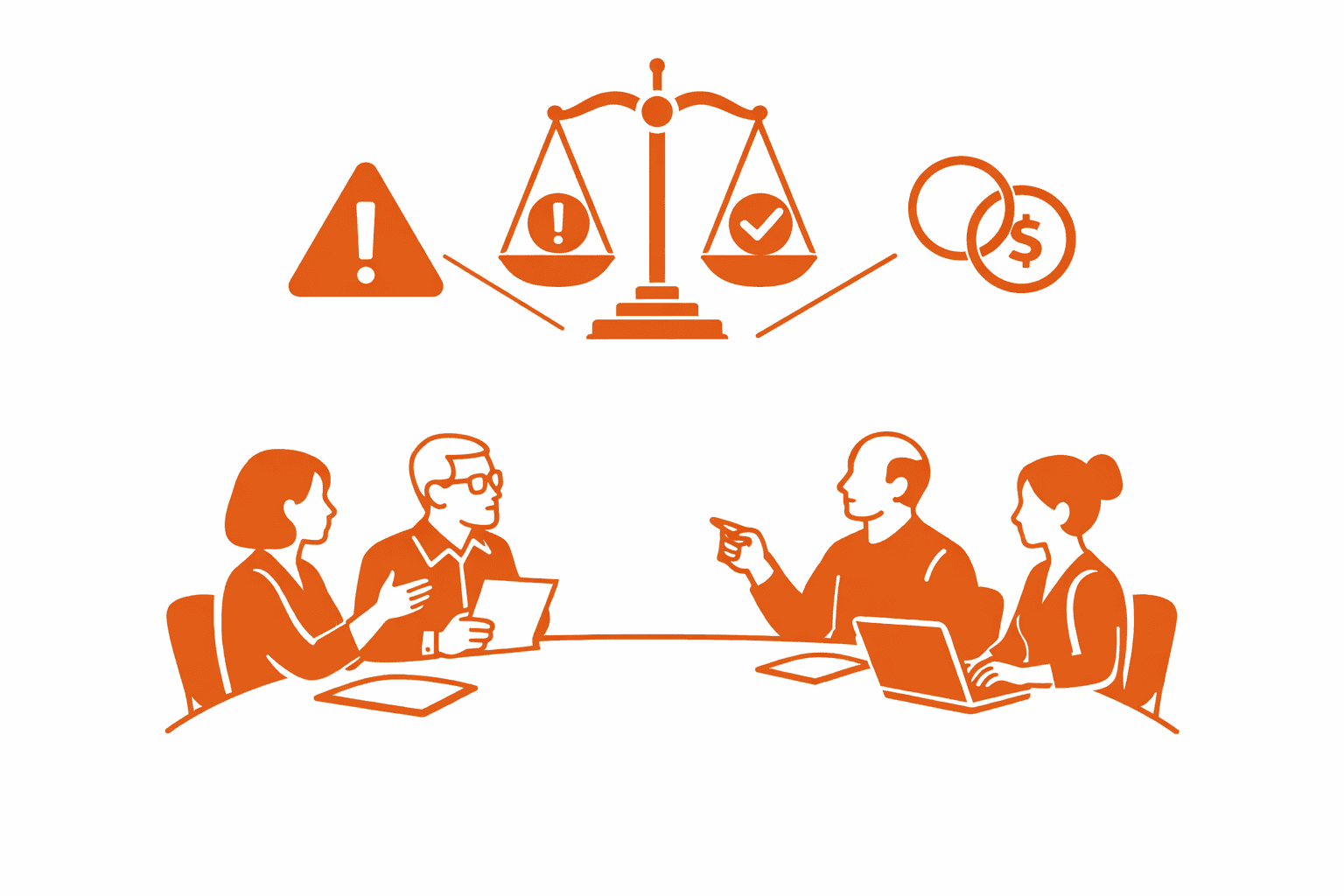
How the board sets the tone for resident culture – consciously or not
Resident culture doesn’t appear by itself. It is shaped - often unconsciously - by the board’s actions, priorities, and visibility. The question isn’t if the board sets the tone, but how.

Most boards want a healthy resident culture. Fewer conflicts. More engagement. More understanding. Yet many HOAs experience the opposite: low participation, limited dialogue, and a growing distance between residents and the board.
That rarely means the board isn’t doing its job.
More often, it means the board isn’t doing the kind of work that shapes culture.
And here’s the key point:
Resident culture isn’t shaped by intentions. It’s shaped by actions.
The board sets the tone even when it doesn’t try
There’s a common belief that culture primarily forms among residents. In practice, it almost always begins with the board. Not through mission statements, but through behavior.
How does the board communicate when things are calm?
How does it react when there’s disagreement?
How does it follow up on what was said?
Even absence sends signals. When nothing is communicated, it gets interpreted. When the board is invisible, it’s noticed. When there’s no update, stories emerge. Often outside the board’s control.
So the real question isn’t whether a culture exists.
It’s which culture the board’s actions are creating right now.
Low participation rarely equals lack of interest
Low participation is often read as indifference: “Residents don’t care.” That’s understandable but usually inaccurate.
In many HOAs, low participation comes from uncertainty. Residents don’t know where they can contribute, whether their input matters, or if decisions are already made. When the invitation to engage is unclear, many choose silence over the risk of stepping wrong.
This is why annual meetings can feel quiet when new board members are needed. The same few step up year after year. When change does happen, the transition itself needs clarity and structure to work well.
A useful question for the board is this:
Have we made it clear where influence is possible and where it isn’t?
Engagement rarely happens spontaneously. It requires clear frames and visible signals.
Sparse information creates distance
Some boards hold back information to avoid unrest or too many questions. The intention is good. The effect is often the opposite.
When information is missing, a vacuum appears. And vacuums get filled—not with facts, but with assumptions. Residents talk. Interpretations form. Small uncertainties grow.
This doesn’t mean the board should communicate constantly or in great detail. But it should be predictable. A steady communication rhythm—even when “there’s nothing new”—creates safety.
Predictability often matters more than volume.
Transparency is about coherence
Transparency is often misunderstood as explaining everything. In reality, it’s about coherence.
When the board’s actions align with previous messages, trust grows. Many conflicts arise because residents can’t see the connection between what was said and what was later done.
Following up on your own messages—or explaining why something changed—creates calm.
A simple test helps: Would a resident who hasn’t followed the issue closely understand the decision based on the shared information?
Visibility is about relationship – not being everywhere
A visible board isn’t one that interferes in everything. Visibility is about recognition and accessibility.
Residents should know who the board is, how to contact it, and what to expect. When roles are unclear—or when the board only appears during conflicts – distance grows.
Visibility is built over time through consistent behavior.
Not big initiatives. Repetition.
Conflicts shape culture – but handling them shapes it even more
Conflicts will arise in every HOA. What matters isn’t whether they happen, but how the board responds.
When disagreement is handled calmly, factually, and predictably, the board sends a strong signal—not just to the individuals involved, but to the whole community. Silence, shifting positions, or unpredictable reactions create uncertainty—even among those watching from a distance.
Culture is shaped by patterns, not one-off cases.
Small actions often have the greatest effect
It’s tempting to look for big solutions to cultural challenges. In practice, resident culture is shaped by small, repeated actions.
Are inquiries answered – even when the answer isn’t final?
Is there follow-up on what was said last time?
Does the board behave consistently, regardless of who asks?
Culture isn’t created by single actions, but by what repeats.
One critical – but fair – question to end with
If you were a resident in your HOA:
Would you experience the board as predictable, accessible, and safe to engage with?
If the answer is “I’m not sure,” that’s not criticism. It’s a compass. Culture can be adjusted. Not quickly—but deliberately.
FAQ about resident culture
- Does the board really shape resident culture? Yes – more than many realize. The board isn’t the only actor, but it serves as a reference point. Its behavior, priorities, and communication patterns are often perceived as the norm.
- What if residents still don’t engage? Then review the frames. Engagement requires clarity about where residents can contribute—and that their input matters. Without clear frames, many choose passivity out of uncertainty, not unwillingness.
- Should the board communicate more? Not necessarily more—but more consistently. Many problems arise from irregular or incoherent communication, not from a lack of information.
- Can a poor resident culture be changed? Yes – but only through repeated actions over time. Culture doesn’t change with one initiative; it changes through consistency, predictability, and clear behavior from the board.