How strong decision processes reduce conflicts in your HOA
Most conflicts in an HOA aren’t about people. They’re about unclear processes. Good decision processes reduce misunderstandings, disappointed expectations, and avoidable conflicts. Here’s a detailed walkthrough of how boards create clarity and security.

Conflicts in an HOA rarely appear out of nowhere. And they almost never emerge because “people can’t get along.” The real explanation is far less dramatic:
Conflicts arise when the board doesn’t have a shared, clear, and consistent way of making decisions.
When processes fail, the human element fills the gaps. Small frustrations turn into misunderstandings. Vague decisions turn into disagreements. And missing documentation turns into: “I thought we agreed that…”
The good news? All of this is avoidable. Conflicts decrease dramatically when decision processes work. And it doesn’t require attorneys, consultants, or long meetings. It simply requires a way of working where everyone can see themselves in the process.
Below, we walk through the most common conflict triggers and how your board can build structures that create calm and collaboration.
Conflicts start when the process doesn’t
When decisions are made without clarifying roles, direction, or practical details, gaps appear. And where there are gaps, conflicts grow. Not loud, dramatic conflicts but the quiet, slow ones that make the work heavier and cooperation harder.
Misunderstandings happen when something is said but not written down. When one person thinks a decision was made, and another thinks it was only a discussion. When no one can fully remember why a certain choice was made last year.
Poor communication appears when the board has no shared way of keeping each other updated. When things are mentioned “in passing.” When someone assumes “the others probably have it handled.” Or when important information ends up in personal inboxes and disappears as soon as the sender steps down.
Unclear roles create invisible friction. If no one knows who is responsible, everything becomes everyone’s job — which often means no one’s job.
And the classic issue: disappointed expectations. Residents who assumed something else. Board members who thought a project was further along. A president struggling to balance operations with communication.
Expectations are explosive when they’re not managed.
It’s not the people who fail. It’s the process.
Why clear decision processes create stability
When a board works with a clear decision process, something important happens: Conflicts drop. The pace drops. And the sense of security rises.
The work becomes structured. Everyday decisions become less improvised.
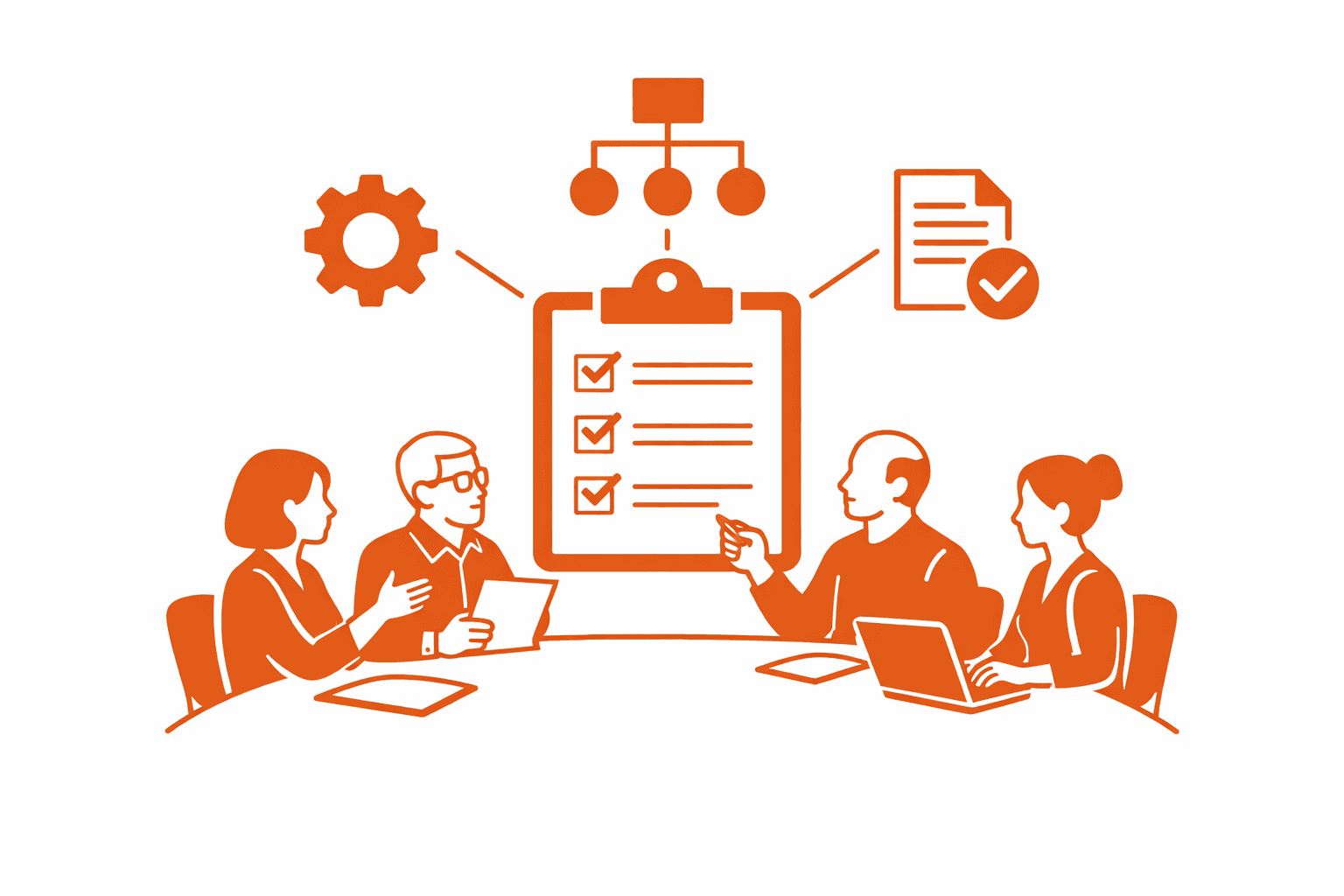
A decision process doesn’t need to be complicated. It simply needs to be consistent. It can be built on three elements:
- What are we deciding? A decision is not a feeling in the room. It must be clear and written: What did we decide? Who is doing what? When does it happen?
- How do we follow up? This is where most conflicts start. Without follow-up, decisions turn into loose ambitions and loose ambitions turn into disappointment.
- How do we document it? A short note. A simple summary. A shared folder. Something that ensures you don’t have to guess in six months.
Boards that work this way experience fewer conflicts because expectations are shared — not imagined.
No one goes home with their own version of reality.
Long presidential terms without structure create hidden conflicts
An HOA can function perfectly well with the same board president for many years. If there is structure. Without structure, the president becomes the holder of all knowledge. And that works — until it doesn’t.
Conflicts often begin quietly:
- Residents become dissatisfied, but can’t articulate why
- Board members feel left out of decisions
- New members struggle to understand the work because the HOA’s history isn’t gathered in one place
If the same president is re-elected year after year — not because everyone is thrilled, but because no one else can take over — then the HOA faces an organizational risk, not a personal one.
A good decision process creates resilience. It allows the board to change members — even the president — without losing knowledge, direction, or momentum. A strong HOA does not depend on individuals. It depends on processes.
Disagreement isn’t dangerous but bad process is
Many HOAs have a misconception: that disagreement equals conflict.
It doesn’t. Disagreement is healthy. It shows that the board thinks critically and takes responsibility seriously.
But disagreement without process becomes conflict.
Process determines the outcome. When the board has:
- a way to discuss
- a way to decide
- a way to document
… disagreement becomes a strength. It improves the decision by bringing more perspectives into play.
When process is missing. When decisions slide from conversations to assumptions to actions that’s when trouble starts.
Documentation is conflict prevention in disguise
Boards rarely document for the sake of documentation. They document to avoid misunderstandings.
Missing documentation leads to four classic problems:
- no one remembers what was decided
- no one can explain why something was done
- new board members can’t catch up
- expectations become unclear
When decisions are written down, conflicts lose their fuel. There is something concrete to return to — something shared.
Documentation is not mistrust. It is the memory of collaboration.
Disappointed expectations: the most common — and most overlooked — source of conflict
No conflict grows faster than a disappointed expectation. And no expectation disappoints faster than the one that was never said out loud.
This is where boards often run into trouble: They assume everyone understands decisions the same way. They rarely do.
Good decision processes reduce this risk dramatically. They create space to say:
“This is realistic.” “This is not realistic.” “This is a priority.” “This will have to wait.”
Realistic communication creates security — both for the board and the residents.
FAQ: Good decision processes in HOAs
- Why do conflicts arise in an HOA? Conflicts usually arise from unclear processes, poorly documented decisions, and unmet expectations — not from personal disagreements.
- What defines a good decision process? A process where the board formulates decisions clearly, documents them, and follows up — without turning the work into bureaucracy.
- How do you avoid conflict during a leadership change? By ensuring knowledge lives in structures and documents — not in people’s heads. The board should be able to change presidents without losing clarity.
- What is the biggest source of conflict? Disappointed expectations. When the board and residents don’t share the same understanding of decisions, timelines, or priorities.